
Golden Valley Previous Residents by Era
Past residents are documented in layers. The earliest useful layer may be a tax list or census page, while a later layer may be a directory listing, permit file, recorded instrument, or parcel record. Each source has its own published range and its own question: a directory can suggest occupancy, a deed can document a transfer, and a permit can place work at an address. The following table keeps those roles separate and identifies the documented coverage rather than assuming that every collection runs continuously.
| Source | Years it covers | Where held | What it shows |
|---|---|---|---|
| Golden Valley permit index | 1995–present | City ePermits and Inspections | Address-keyed permit and inspection trail |
| Recent recording history | Last five years | Hennepin property portal | Limited recent instruments that may be incomplete |
| Deed and title index | Earliest online year not published | Recorder, RecordEASE, and public kiosks | Transfers, liens, plats, mortgages, releases, and Torrens records |
| Golden Valley directories | 1951–1981 | HCLIB ResCarta | Dated address-to-occupant or business leads |
| Broader HCLIB directories | 1859–1983, coverage varies | HCLIB Special Collections and digital holdings | Minneapolis and suburban name or address leads |
| Federal census | 1790–1950 public records | National Archives and genealogy services | Household and address-area clues |
| MNHS birth and death indexes | Births 1900–1934; deaths 1904–2001 | MNHS People Records | County, date, and certificate-index leads |
| Hennepin tax records | 1860–1901 | Minnesota State Archives and FamilySearch access | Taxpayer and property clues by township and year |
The five-year recent-history display is a convenience tool rather than a full title history. When its date range ends, continue with the Recorder’s research routes. When a directory begins or ends, move outward to library collections, census work, newspapers, tax records, and the Historical Society instead of treating the gap as proof that no one lived there.
Golden Valley Previous Address Records
The present street address is useful, but it can be a weak key for older Golden Valley research. Start in Hennepin County Property Information Search with the house number and street, then capture the PID, legal description, addition, lot and block when shown. The portal supports address, 13-digit PID, and addition-name searches. Its search tips also matter: directions normally go at the end, and a street name needs at least three characters. The county updates the database on business nights, but the assessor display is not a deed index. HCLIB’s home-history research guidance supplies the matching local-history route.
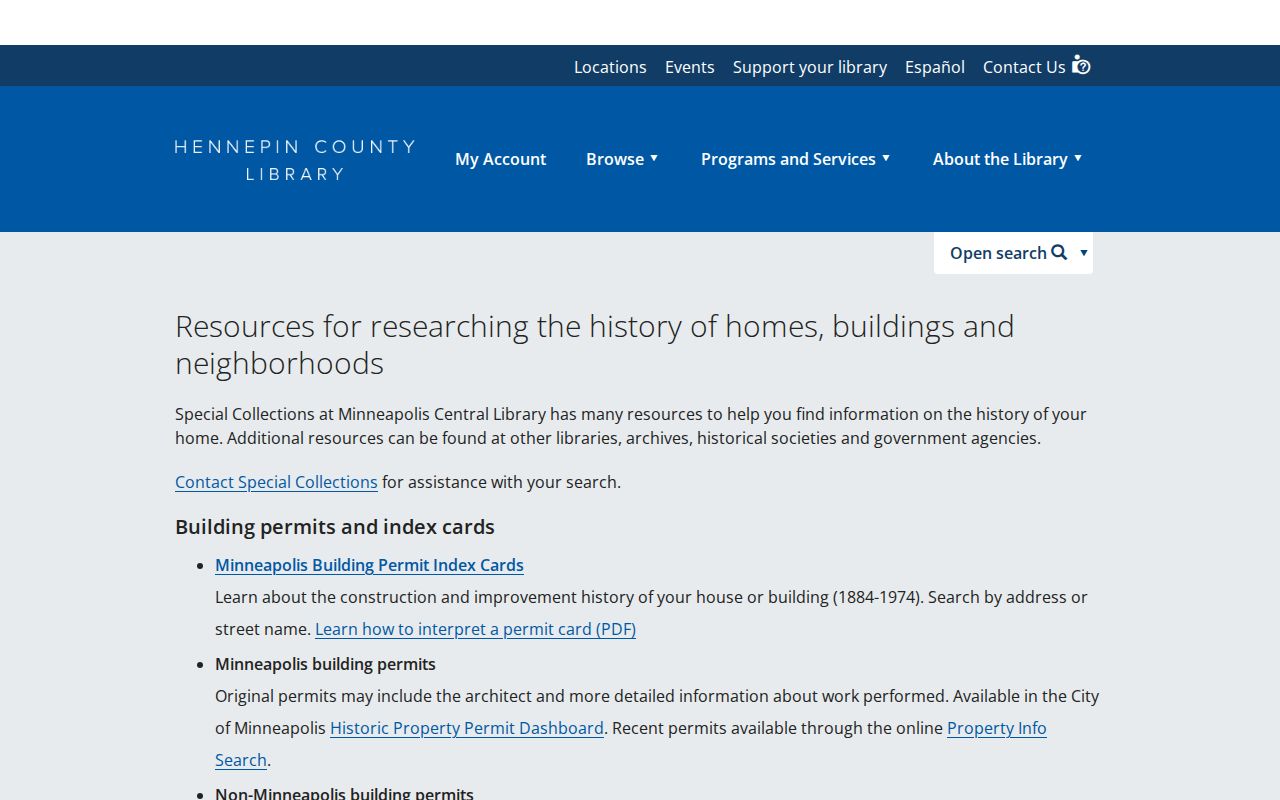
That guidance recommends pairing directories, permits, maps, newspapers, census material, deeds, and local sources. The sequence fits Golden Valley because an assessor mailing address may belong to a taxpayer or other notice recipient, while the situs line identifies the parcel location. A Minneapolis mailing line does not by itself rule out a Golden Valley situs.
Next, use the Hennepin property map to confirm the parcel in geographic context. The map is a reference tool, not a legal survey. It helps reconcile the PID, street address, adjoining roads, and modern parcel polygon before the legal description is used in Recorder research.
Golden Valley Previous Deed Records
Hennepin County Recorder and Registrar of Titles research is the route from a current parcel to older transfers. RecordEASE searches are strongest by legal description or individual or entity name. The county describes a limited free Public Search and a paid RecordEASE Pro route, while public research kiosks are available at the Hennepin Government Center. A current parcel search provides the PID and legal description needed to keep the chain attached to the same land even when a street label changed.
- Find the current parcel in the assessor record and save the PID, legal description, addition, lot and block, and current situs address.
- Use the legal description and current party name in RecordEASE or at a public kiosk to locate the latest deed or certificate memorial.
- Record the document number, recorded date, instrument type, grantor, grantee, pages, and legal description from that instrument.
- Take the seller from that transfer and search the seller as a grantee to locate the prior acquisition, while checking each result against the same legal description.
- Repeat backward until the chain reaches an index or format limit, then ask the Recorder whether older index, paper, certificate, plat, or staff research is needed.
- Grantor
- The party transferring an interest in the recorded instrument.
- Grantee
- The party receiving that interest. In a backward search, a prior seller may appear as grantee on an earlier acquisition.
- Chain of title
- The documented sequence of transfers and related land records for the same legal description.
- Legal description
- The recorded land description, such as a lot, block, addition, or other parcel language. It is more stable than an address for historical searching.
Golden Valley Previous Torrens Records
Hennepin records both abstract and Torrens property. The county says about 45% of its property is Torrens, so a deed-only method can miss a certificate trail. A Torrens certificate identifies the current owner, legal description, and memorialized interests such as liens or encumbrances. If a parcel record or instrument names a certificate number, request the certificate and its memorial history rather than assuming the deed index tells the complete story.
The Recorder records deeds, mortgages, assignments, releases, satisfactions, liens, plats, and other instruments. A good Golden Valley previous residents log keeps those classes distinct. Record the document number and date for each item, then note whether it is an index result, an image, a certificate page, or a staff-provided copy. The county does not publish the earliest year in its online deed index, so an online blank should be treated as an access limit that needs a kiosk or Recorder follow-up.
Note: A current assessment name or a recent sales field is useful cross-reference material, but the recorded instrument or Torrens certificate is the stronger title evidence.
Golden Valley Past Residents in Directories
The HCLIB Golden Valley collection supplies dated occupancy leads from 1951 through 1981. Search an address in multiple years, then search the surname, spouse indicator, business, nearby addresses, and historical road name. A directory listing may identify an occupant or business, but it does not prove ownership and an omission does not prove absence. The HCLIB collection is the historical shelf for this work, while the current address chain belongs to the Recorder and assessor.
HCLIB Digital Collections provides browse and search access to phone books and city directories, with image viewing, printing, and downloading. Capture the publication title, directory year, page, printed city line, address, name or business, and image link. Those fields make the same entry checkable when the address is later compared with a census page, deed, tax record, or obituary.
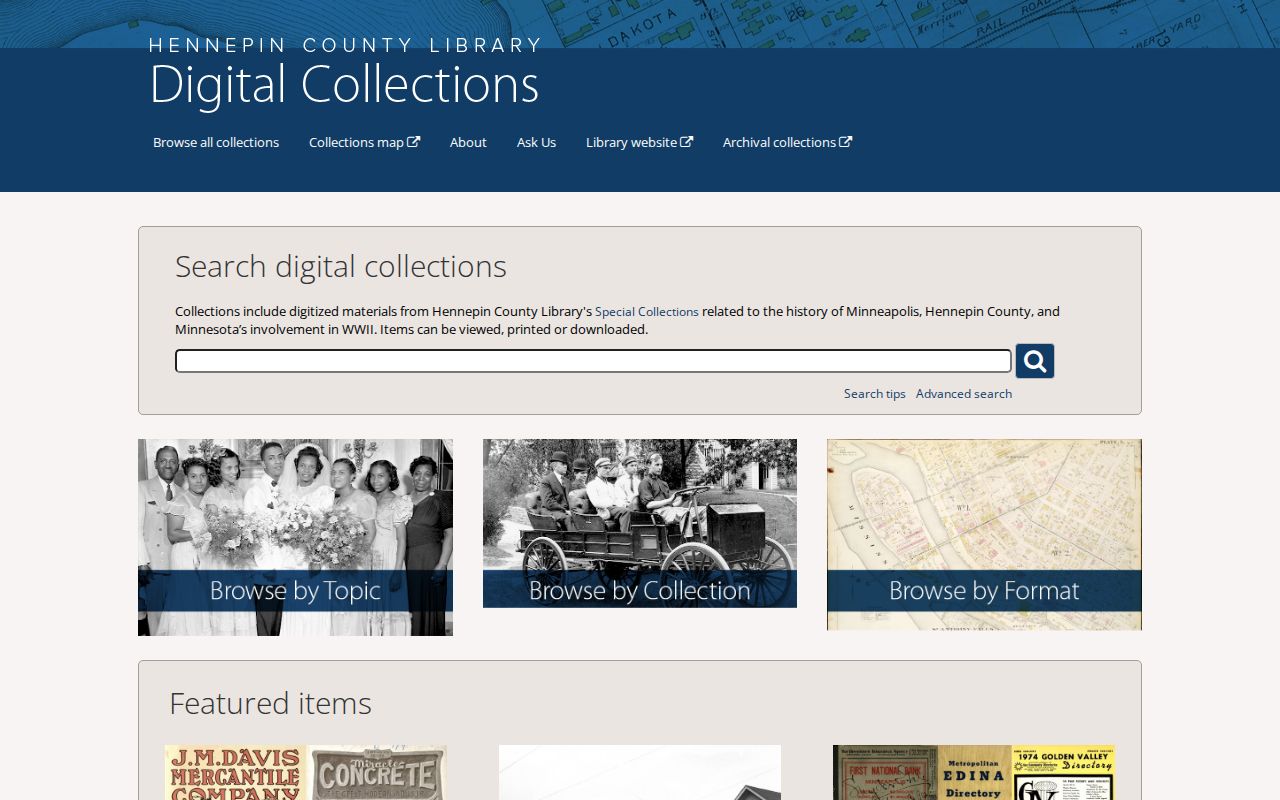
For detailed collection filters and entry-reading practice, use the Golden Valley city directory collections. Directory entries remain dated household leads, even when a sequence looks continuous. Keep an evidence note for each year rather than merging separate people with a similar name.
Golden Valley Previous Residents Census Pairing
Census schedules add a household layer that deeds do not provide. The public federal census range reaches 1950 under the 72-year rule, while HCLIB’s digitized Golden Valley directories cover a later local span. Pairing them works best when the researcher first writes down the address form and locality from each source. A census record may identify a district or address area instead of a modern street number, and a Golden Valley address may appear with a nearby city label in a directory.
- Begin with one directory year or deed date and preserve the street, city line, and spelling from the original source.
- Find the nearest available census year and compare household names, age ranges, relationships, and address-area clues without assuming a match from surname alone.
- Use the next directory years to see whether the address or household clue changes before the following census interval.
- Test a departure or arrival against a newspaper, tax record, obituary, probate file, or a dated land instrument.
- Mark every link as verified, corroborated, or unresolved and retain the citation for both records.
MNHS People Records can add index leads for births, deaths, state census, veterans’ graves, and Gold Star Roll material. Its index is not a substitute for a certified record or a full household history. Use a date, county, and certificate or index number to request the appropriate underlying record when access rules permit.
Golden Valley Previous Residents and Permit Gaps
Golden Valley’s online permit search covers permits issued from 1995 to the present and is searchable by house number and street address. For an older building or a question about earlier work, use the city’s Public Records Request process or contact the responsible department with an address, PID, date range, and record type. Ask for existing applications, inspection results, certificates of occupancy, plan-review correspondence, or closed files rather than an open-ended request about a person.
The city follows a record-specific retention schedule. An online index does not prove that a prior paper file was destroyed, and a retained index may not include all plans or attachments. Ask whether the series was converted, transferred, superseded, or destroyed under an approved schedule. A written custodian response turns a missing file into a documented research result instead of a speculation.
Golden Valley Previous Addresses Before Incorporation
Golden Valley’s city history places the village incorporation on December 16, 1886, with an annexation of about 0.6 square mile in 1893 and city designation in 1972. Those dates are useful research boundaries. A record before incorporation can be held under township or county jurisdiction, while a record in the annexed area can use an older legal description. The dates guide a repository choice; they do not themselves prove where a particular household lived.
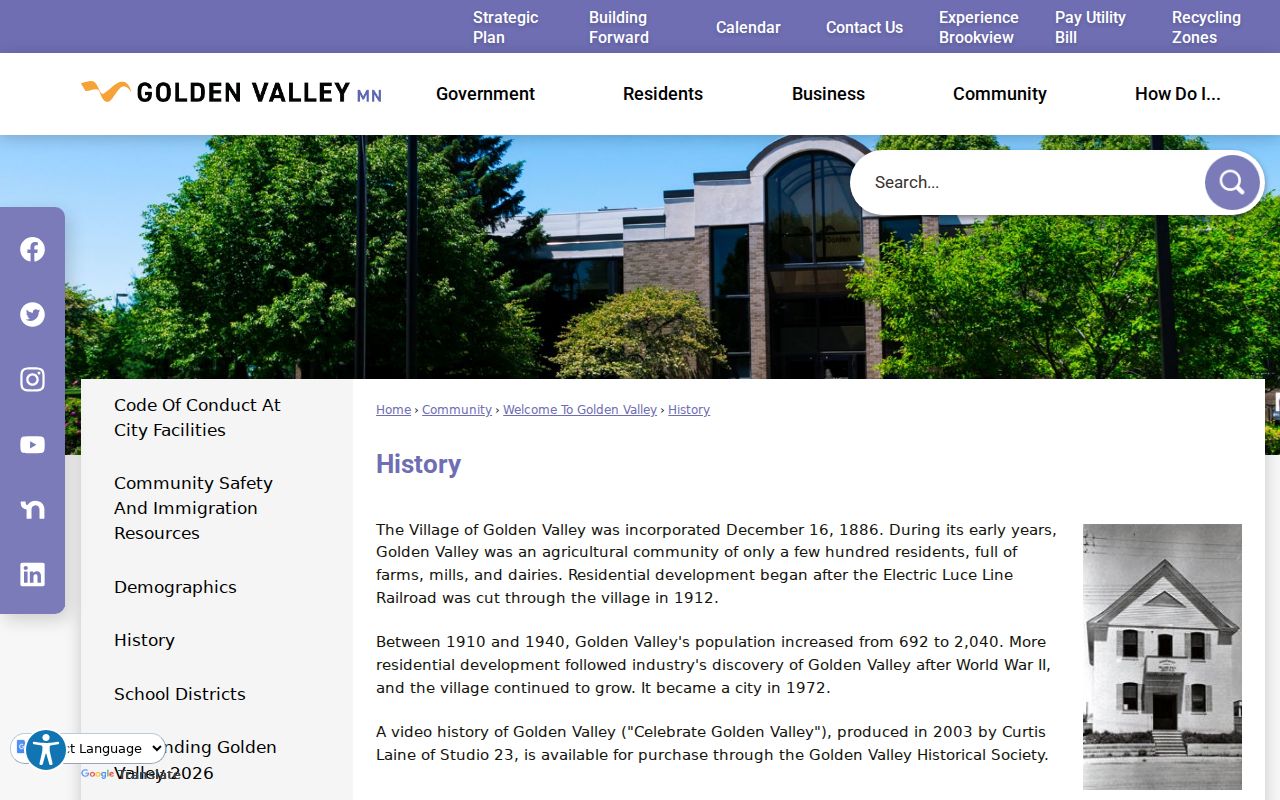
The 1912 Electric Luce Line and later road construction changed development patterns. Watertown Road is the documented former name of Golden Valley Road. When an old address does not match a modern search, retain the historic wording and compare it with the PID, legal description, plat, old road name, and current parcel map. No citywide street-number renumbering event was verified in the research, so it should not be assumed.
Golden Valley Past Residents House-History Limits
House history is a useful way to understand a property, family connection, neighborhood change, or estate question. It still has privacy limits. Minnesota Government Data Practices Act classifications, Safe at Home protections, vital-record eligibility, court-access rules, and federal motor-vehicle privacy law restrict what can be obtained or republished. Do not attempt to reverse-engineer a protected address from a designated mailing address or combine old records into a current personal profile.
A name that appears in a directory or deed should be reported as a dated record result, not as a statement about a living person. Stop a person-level search when a source has a protected-data notice. For a public city record that is not online, request the releasable portion from the correct custodian under Minnesota Statutes Chapter 13.
Golden Valley Previous Residents Research Log
A compact log makes a backward address search reproducible. Record the source URL, access date, query, search terms, result count, PID, legal description, document number, directory year, page, image link, and the source date. Separate “found in index,” “underlying record obtained,” and “identity or parcel verified.” That separation is important when an old street name, mailing label, or similar surname creates a plausible but unconfirmed connection.
For a negative result, record the exact search and the coverage limit. The earliest online Hennepin deed-index year is not published, and the recent five-year history display may be incomplete. A written Recorder response, public kiosk search, or staff retrieval is the next step when the online route ends. The finished trail should show what each record actually supports and where the remaining gap begins.